 EN
EN  ZH
ZH Limited driving range, charging time, and fluctuating energy consumption are just some of the factors that make electric vehicles uniquely challenging. Research shows that customized electric vehicle route planning can significantly reduce energy consumption and operating costs. In fact, intelligent route planning can… Energy consumption will be reduced by approximately 311 TP3T (In real-world simulations) it has been demonstrated that strategic route and charging planning can maximize fleet efficiency.
As fleet electrification grows, understanding the necessary planning to control rising costs and downtime is crucial. In this article, we'll explore the importance of EV route optimization, implementing the right tools, and... Why the Cartrack platform is your best choice.
Key points:
- EV route optimization helps fleets reduce costs, protect batteries, and ensure vehicles run on time.
- Finding the optimal EV route means using fleet software that can plan range, charging, and energy usage.
- Free navigation apps cannot handle the needs of electric vehicle fleets, such as charging planning, real-time data, or cost control.
- Cartrack's real-time insights and intelligent route planning transform EV planning from guesswork into reliable daily operations.
How to find the best routes for your electric vehicle fleet?
By using electric vehicle fleet software and its professional features, you can obtain the best routes for your electric vehicle fleet. Electric vehicles have their own unique characteristics. Unique needs and vulnerabilities Unlike internal combustion engine (ICE) vehicles, factors such as charging habits and battery limitations need to be considered to achieve overall productivity.
Electric vehicle route planning is more than just finding the fastest route; it ensures vehicles complete their journeys within battery limits. This allows vehicles to stay on the road longer, reduces operating costs, and improves reliability. Comprehensive data is also crucial for effective route optimization. It enables you to make informed decisions. To avoid battery life issues, And quickly adjust the route when conditions change.
By combining comprehensive data with smart charging planning and dynamic rescheduling, you truly enhance operational reliability. These features ensure your routes are not only fast, but also efficient, safe, and customized for electric vehicle operations.
What is electric vehicle route optimization?
Electric vehicle route optimization By combining technology and intelligent planning, optimal and fastest routes are secured for electric vehicles. This planning considers operational needs, such as maintaining low energy consumption and ensuring charging points are always readily available. Compared to ICE vehicles, electric vehicles require battery performance feedback, charging station information, and range limitations, which is why route planning is so crucial.
Why is optimizing electric vehicle routes important for a fleet?
Optimizing electric vehicle routes is crucial for fleets because it involves considering numerous factors—not just planning the fastest routes. Route optimization directly impacts overall fleet costs, service punctuality, battery health, and range anxiety. Even the smallest oversight can ultimately lead to significant downtime.
Key insights include:
- Energy consumption varies depending on terrain, speed, and load: Energy consumption may be higher if the terrain is rugged or uneven. This should always be considered when planning a route.
- Prolonged idling and traffic congestion will reduce the range of electric vehicles. Depending on the nature of your business, your electric vehicle may frequently stop and start or idle during your journey. This will drain the battery faster than normal, so extra care is needed.
- Poor planning leads to unnecessary charging stops and higher charging costs: Choosing not to plan your route in advance means you risk your electric vehicle stopping unexpectedly or using an unplanned charger, which can cause significant downtime and potentially negatively impact your vehicle's battery.
- Optimizes and protects battery life: Route planning is clearly essential for electric vehicles. Among other benefits, optimization actually extends the life of your battery and vehicle, minimizing battery degradation.

What factors deplete the range of an electric vehicle the fastest?
Fastest consumption Factors affecting the range of electric vehicles Factors affecting the range of electric vehicles include extreme temperatures and terrain.
Please see the following different factors:
- Extreme temperatures: Both high and low temperatures will cause your electric vehicle to consume more energy from battery thermal management.
- weight: If a vehicle carries a large amount of cargo, it means that the vehicle needs more energy to operate (move, accelerate, or even maintain speed).
- terrain: Rugged or uneven terrain consumes more energy, especially when there are uphill sections or multiple short stops.
- speed: Electric vehicles consume more energy when traveling at high speeds than when traveling at steady or cruising speeds.
Can free apps optimize electric vehicle routes for a fleet?
Technically, free apps can optimize electric vehicle routes for fleets, but they do have limitations. Google Maps, Waze, and other navigation apps are better suited for personal and private travel.
Here are some limitations:
- Based on a single trip, not the entire convoy: These free apps are generally better suited for a single trip by an individual, rather than multiple trips undertaken by multiple drivers simultaneously.
- No driver assignment or work schedule: 與 Fleet Management Platform Unlike other applications, free apps do not assist with task allocation or changes that require urgent handling.
- Limited visibility of charging networks: Free apps may display charging station locations, but they don't offer essential additional features such as charger type or supplier information.
- No total cost of ownership insight, no cost or energy report: Fleet management platforms offer detailed reports and insights that free navigation apps cannot provide.
- Not integrated with electric vehicle telematics or maintenance data: One of the most important features of the fleet management solution is Integrate Integration is key, especially considering the importance of range, battery health, and vehicle status data. The free app does not support precise planning and proactive maintenance.
What are the differences between electric vehicle route planning and ICE route planning?
The difference between electric vehicle route planning and ICE route planning lies in the fact that electric vehicle route planning needs to consider key factors such as charging, range, and travel time. On the other hand, ICE vehicles focus more on refueling and related networks.
Please see the table below for a quick comparison of the various considerations:
| factor | Electric vehicle route considerations | Considerations for fuel-powered vehicle routes |
| Refueling/Charging | Slow charging speed, limited number of gas stations, and high prices during peak hours | Fast, with ample gas stations, and minimal impact on routes. |
| range | Significantly affected by battery, load and weather. | More stable and more predictable |
| terrain | Uphill, power consumption is faster; downhill, power charging is faster. | It has little impact on fuel consumption. |
| Traffic/Idle Time | Significant battery degradation | Fuel consumption has minimal impact. |
| Speed effect | The faster the speed, the higher the energy consumption. | Marginal impact |
How can electric vehicle route optimization software provide assistance?
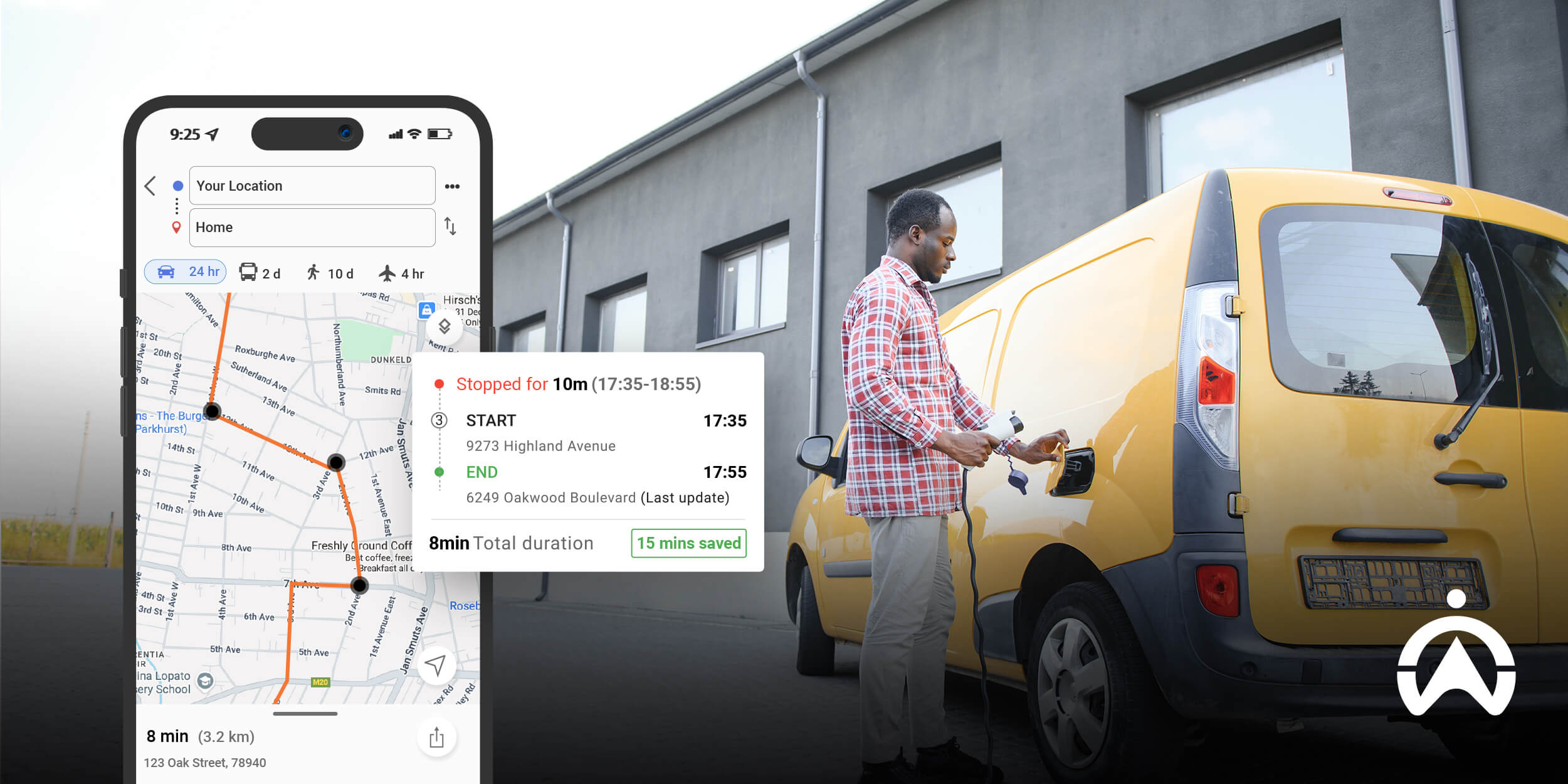
Route optimization software Optimal operations are ensured by combining technology with meticulous planning. Because certain factors are unsuitable for ICE vehicles, route optimization systems supporting electric vehicles must implement practical alerts, continuous real-time data, and advanced algorithms.
Advanced systems such as Cartrack offer the following key features:
Real-time battery and energy forecasts
Before optimizing your route, battery and energy status should always be visible, and data should be continuously collected for predictive purposes. These continuous updates, along with forecasts based on factors such as traffic and weather, help you plan your trip with confidence, without worrying about range challenges.
Charging docking schedule
The software should help you plan your charging stops in advance, even before the battery level becomes dangerously low. It should comfortably balance charging speed, charging station availability, and estimated SoC (State of Charge) to prevent long detours and unexpected stops.
Real-time traffic and terrain prediction
The driving range of an electric vehicle is not constant. Energy consumption is affected by factors such as regular parking, gradient, and other factors. The impact of traffic congestion. In order to select routes that minimize energy loss and help maintain vehicle range, optimization software must take into account real-time traffic and terrain data.
Plan ahead for cheaper charging stations to avoid high charging costs.
Not all charging stations are created equal. Some are more expensive, charge slower, or become crowded during peak hours. But with route optimization tools, you can identify cost-effective charging stations and plan your charging stops wisely, saving money while maintaining excellent service quality.
Electric vehicle route optimization loop (step-by-step checklist)
Electric vehicle route optimization is not a one-off task; it requires continuous effort to maintain a high level of efficiency. For your fleet, this means consistently ensuring route accuracy, cost-effectiveness, and flexibility to adapt to real-world changes.
Please refer to the following quick 6-step checklist when optimizing:
- Check real-time SoC (Status of Charge) and battery health
- Analyze energy forecasts (load, topography, weather).
- The plan includes routes with charging stops.
- Assigning tasks to drivers and vehicles
- Real-time route monitoring and automatic updates
- Review energy use and trip analysis
Final Summary
Electric vehicle route optimization has become an essential competitive advantage for fleets. Without accurate and energy-efficient route planning, your fleet will face high costs, unreliable schedules, charging delays, and accelerated battery wear. Conversely, optimized electric vehicle routes offer predictable performance, improved cost management, and consistent service quality.
along with Electric vehicle fleets and electrification expansionRelying on manual planning and basic navigation tools will not adequately address the complexities associated with driving electric vehicles. If your business is focused on efficiency and sustainability in the long term, investing in the route optimization and right tools that Cartrack offers is not just an option, but a necessity.
No more worries about electric vehicle range. Gain access to reliable routes, protected battery health, and lower operating costs. ,use Cartrack's electric vehicle-ready fleet software.
Frequently Asked Questions
Q: Can a fleet optimize its routes without electric vehicle telematics technology?
A: No, fleets cannot optimize routes without electric vehicle telematics, because it is the information provided by telematics that helps address challenges such as range anxiety and unplanned charging. Technically, it's possible to some extent, but predictions will be extremely limited, and planning will be purely based on estimates – not facts.
Q: Is it possible to drive beyond the optimized electric vehicle route?
A: Yes, when deviations are necessary, the driver can deviate from the optimized electric vehicle route. Not all trips will go as planned, but the software will always record these deviations. Therefore, you as the manager will receive alerts and can take the necessary steps to adjust and change the plan accordingly.
Q: How does route planning handle sudden drops in energy or changes in weather?
A: Route planning addresses sudden drops in energy or changes in weather by making necessary adjustments in real time. Since these changes can significantly impact your electric vehicle's operation and travel time, consider rerouting your route or finding alternative charging locations.
Q: Is electric vehicle route optimization applicable to mixed ICE and electric vehicle fleets?
answer: Yes, electric vehicle route optimization is suitable for hybrid ICE and electric vehicle fleets. If you have an advanced fleet management system...For example FleetwebThis eliminates the need for different platforms for each vehicle type. Advanced systems should be equally applicable to the optimization of all vehicles and support businesses looking to transition to electrification.