 EN
EN  ZH
ZH With real-time data constantly pouring in, why not leverage it to build a better, more comprehensive fleet management strategy? This is exactly what your waste management team needs.The powerful advantages of reliable GPS solutionsThis article explores the right GPS tools for tracking your fleet of abandoned vehicles, and how Cartrack can help you maintain control and keep your operations running smoothly.
Key points:
- GPS tracking helps waste truck fleets reduce fuel costs, minimize delays, and adhere to tight collection schedules.
- Real-time tracking and route data make processing missed delivery reports and customer complaints faster.
- Driving monitoring and trip history recording improve safety, accountability, and service verification without requiring excessive micromanagement.
- Powerful GPS platforms (such as Cartrack) can provide complete visibility and control across vehicles, routes, and assets.
How GPS tracking can improve the efficiency of waste collection routes
GPS tracking, through a combination of technology and meticulous planning, enhances your fleetCreate the best, most optimized routeThis improves the efficiency of waste collection routes. It's an excellent example of translating vehicle insights into actionable knowledge. GPS tracking also allows you to stay informed and take swift action in case of unexpected delays or obstacles.
What is GPS tracking in waste disposal management?
GPS tracking in waste managementUsing GPS Data is used to track your vehicles and the waste they carry, monitoring their movement, routes, and other operational data. Tracking at the fleet management level helps you gather the information needed to make informed decisions. Tracking can be divided into...Active or passivePassive tracking stores data for later analysis. Active tracking provides real-time insights, allowing you to make immediate adjustments in case of unexpected stops or route rerouting.
Why are waste collection fleets particularly difficult to manage?
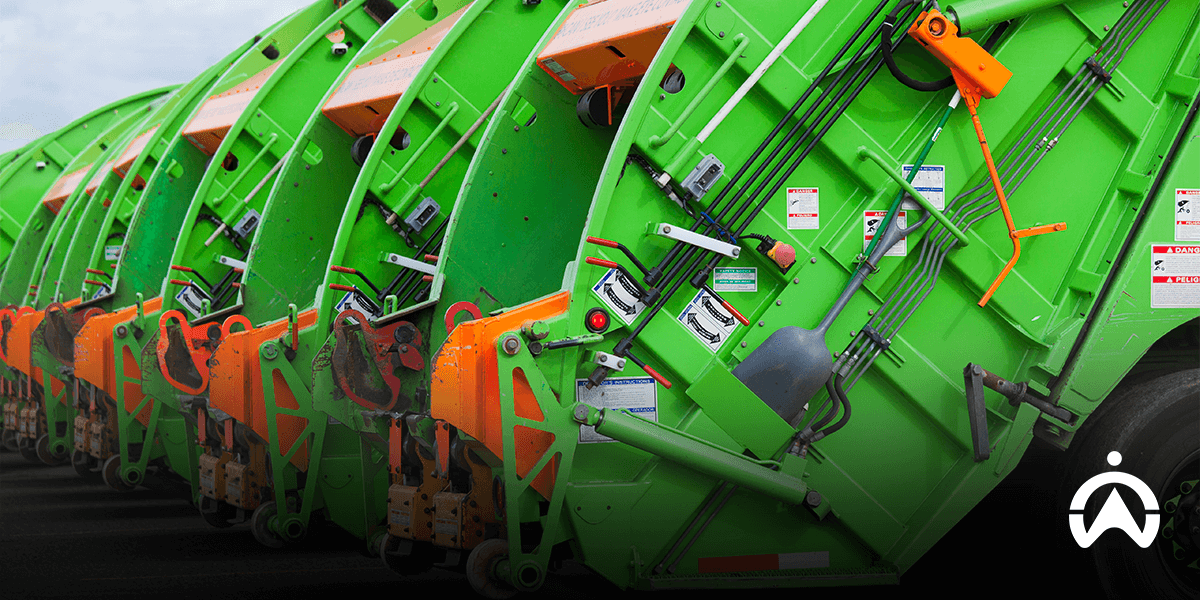
Waste collection fleets are particularly difficult to manage due to daily challenges such as frequent starts and stops, high risks, and public responsibility. You can overcome these and other waste management obstacles by utilizing GPS tracking and its optimization features. Here are some specific challenges you may face:
- Fixed schedule vs. unpredictable realitiesCleanup routes are usually planned in advance, but factors such as traffic or construction may slow down your productivity.
- Frequent stop-and-go driving and fuel consumptionThe waste collection work involves numerous stop-and-go trips. Combined with the urban layout, this leads to significant fuel consumption.
- Pressure on public responsibility and service standardsThe pressure to deliver services on time can be overwhelming. Missing a stop or being late can lead to complaints and threaten contractual agreements.
- Heavy vehicles, safety risks and compliance requirementsThe vehicles themselves are large and have a high load capacity, and are also required to comply with health and safety regulations.
Assets (trucks, garbage bins, containers, drivers, dispatch yards)Coordinating and supervising multiple interconnected assets over a large area requires tremendous effort.
How GPS tracking can help you manage waste collection trucks more effectively
GPS tracking helps you manage your waste trucks more effectively by supporting route optimization, improving operational processes, monitoring driving behavior, and other routine procedures. This is crucial for maintaining smooth operations, especially when unexpected stops or delays occur. Let's see how tracking can help you better manage your waste trucks:
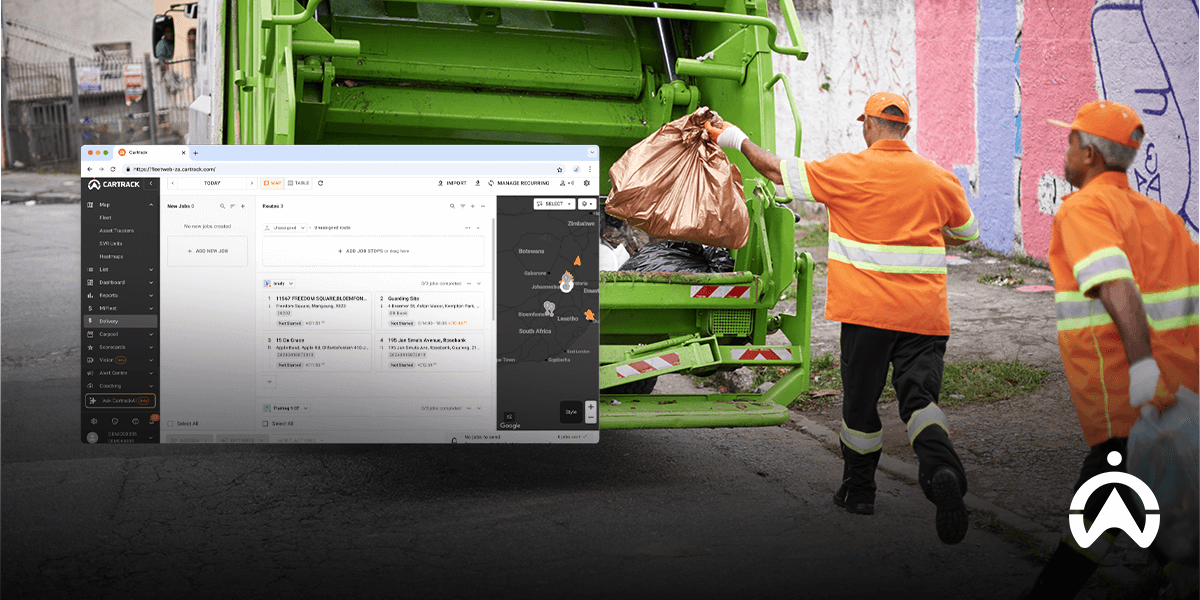
- Real-time visualization of the entire teamThis means you can monitor every vehicle in your fleet. It's not just about location or vehicle movement; it's about your ability to respond quickly and effectively to unexpected challenges. This level of visibility is especially important when considering South Africa's load constraints (rotating power supply), rural accessibility, and metropolitan area layout, as these factors can easily impact service delivery and disrupt established routes. GPS tracking enables faster corrective action, allowing you to resolve issues immediately, rather than dealing with complaints afterward.
- Smarter route planning and reduced wasted mileageThis is key to optimizing operations. GPS tracking optimizes routes by analyzing traffic patterns, past trip data, and real-time conditions to improve travel time and reduce fuel waste.Reduce fuel waste(Especially for trips with frequent starts and stops) This will directly impact your fuel costs, making fuel expenses more predictable and preventing some trucks from overworking while others are idle.
- Without micromanagementImprove driving responsibility systemGPS tracking allows you to gain a comprehensive understanding of driving behavior from a distance without excessive intervention. This management approach gives drivers an independent workspace without sacrificing oversight. When problems arise (such as poor driving behavior), well-documented data can be used for educational feedback, as objective facts always provide the strongest evidence. This evidence is also crucial for "service verification": if a customer or city government files a complaint, GPS tracking history can confirm that your driving has completed its duties.
- Better asset utilization and vehicle uptimeTracking helps maintain better asset utilization. By displaying trip history records that show vehicle usage, you can balance overused or underutilized vehicles.Predictive maintenanceIt also plays an important role. When you know your vehicle's mileage and fuel consumption, you can schedule maintenance before a breakdown occurs.
GPS Tracking Application Cases in Waste Disposal Operations
While waste collection capabilities vary by region, service, and other factors, GPS tracking undoubtedly improves processes across a wide range of scenarios. Let's take a closer look at some of these application examples:
- Managing municipal waste collection routesTracking ensures vehicles are on the correct routes. Historical trip logs reveal recurring problems ranging from missed garbage collection to disruptions in the smooth operation of services. This is especially crucial in South Africa, where missed garbage collection often leads to public complaints and intense scrutiny of municipal services.
- Tracking the removal of industrial and commercial wasteThis means that work must be done within the agreed-upon timeframe. Tracking confirms whether drivers have fulfilled their contractual obligations and provides additional safety for high-risk missions. Any disputes or complaints can be quickly resolved using evidence provided by tracking.
- Monitoring dump trucks' routes to landfillsWaste collection is not limited to roadside collection. GPS tracking insights can help improve task allocation and turnaround time between collection points and disposal sites, maintaining productivity.
- Container and trash can tracking across multiple locationsManaging containers is difficult when there is a lack of clear overview of vehicle movement. Tracking can reduce the number of lost or misplaced bins and provide precise location data to enhance planning for container maintenance, relocation, or replacement.
GPS tracking is the most important function for waste collection trucks.
Not all tools will meet your standards; here are some core features you should pay attention to:
- Real-time tracking and trip historyReal-time tracking is key to comprehensive visibility. The best solution should maintain a stable connection even in low-signal areas and have detailed trip logs for immediate intervention.
- Route Replay and Service VerificationIn the event of a dispute or complaint, you should be able to trace the detailed itinerary as evidence of service.
- Heavy vehicle driving behavior monitoringBecause the waste collection trucks need to travel heavily loaded to various locations, the monitoring system can...Assist in correcting provocative driving behaviorAnd cultivate safe habits.
- Alerts, Reports and Compliance SupportAutomated alerts update the status when route changes, delays, or events impacting productivity occur. Detailed reporting simplifies compliance processes.
Integration with a wider range of fleet management toolsIntegrating GPS tracking and management tools allows you to monitor vehicle, driving, and performance data on a single platform, rather than managing multiple disconnected tools.
GPS Tracking vs. Manual Waste Fleet Management
The table below highlights how GPS systems can simplify routine tasks and enhance oversight:
| Operational tasks | 無 GPS track | have GPS track |
| Route Guide劃 | Artificial, static | Data-driven, optimization |
| Missed collection and removal | Difficult to verify | Easy to identify |
| fuel usage | estimated value | Precise monitoring |
| Customer complaints | Difficult to solve | Supported by location data |
| Compliance Report | Time-consuming and laborious | Automated generation |
How Cartrack Supports Your Fleet Management
Cartrack supports your fleet by providing real-time tracking, flexible solutions, detailed insights, and complete control. Our constantly updated tracking system ensures vehicles stay on the right routes and reacts quickly to delays. Regardless of fleet size, our diverse platform delivers data-driven transformation, enabling early detection of operational risks through precise, time-stamped information.
Final Conclusion: The Importance of Visualization and Control in Route Optimization
If you want to manage a highly successful, safe, and optimized waste collection fleet,GPS tracking solutions are your best choiceTight schedules, public oversight, and rising costs have made GPS tracking an absolute necessity. Cartrack is your trusted long-term partner, giving municipalities and private operators the confidence and control to successfully manage their fleets.